


 Contact Us
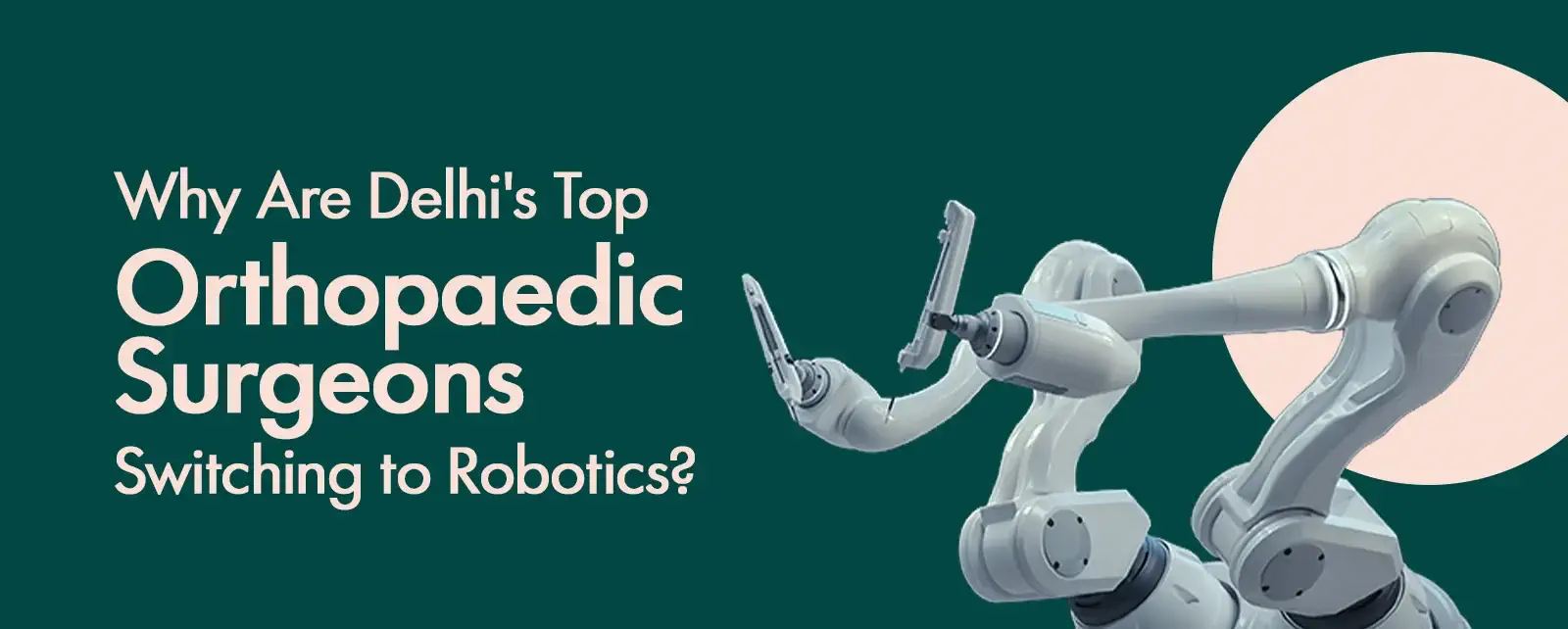
Why Are Delhi's Top Orthopaedic Surgeons Switching to Robotics?
Introduction
There is a change happening in the operating rooms of the major hospitals in Delhi. Surgical doctors who taught their whole life to master the art of replacing joints and performing intricate bone operations are now working side by side with robots - and the transition is not only unintentional but also not fuelled by newness.
Shift signifies a better insight as to what patients require:
- Regular outcomes
- Fewer incidents
- Recoveries that do not interrupt their lives for months
All the orthopaedic hospitals in Delhi that invested in robotic-assisted technology have done so after:
- Analysing outcomes statistics
- Determining revision rates
- Hearing from patients who cannot be assured of a more positive surgical experience than the conventional approach alone can provide
Surgical Precision in the Clinic: A Clinical Imperative
Limitations That Manual Surgery Was Not Able to Conquer
Exceptional skill has always been required in the field of orthopaedic surgery. Total knee replacement, hip arthroplasty, and spinal fusion are procedures that may mean the surgeon is dealing with tight anatomical margins where a few degrees of misalignment can:
- Change the gait of a patient
- Hasten the wear of an implant
- Force the surgeon to repeat the procedure in a few years
Manual techniques rely on the visual, tactile and pre-operative templating of the surgeon, which is subject to:
- Fatigue
- Anatomical variability
- The limited nature of human perception in a three-dimensional surgical environment
This is not a weakness of particular surgeons; this is the limit of what unassisted human motion can consistently accomplish.
Game Changer of Robotics
Orthopaedic surgery robotic systems do not override the decision-making of the surgeon. They instead decode what the surgeon plans to do before surgery into intraoperative movements that could be repeated with a repeatability that cannot be achieved using the manual technique. The system is continually correlating the anatomy of the patient, mapped by CT imaging, with the position planned as a result of a surgical process and interferes in case of a motion that would lead to deviation.
To any leading orthopaedic surgeon in Delhi, it implies the possibility of customising the placement of the implants to fit the unique anatomy of the individual patient instead of falling back to population-average positioning. The clinical outcome is implants that move with the way a particular patient moves, with no regard to the way an average patient moves.
What the Data Tells You About Robotic Orthopaedic Results
Revision Rates and Long-term Implant Performance
One of the most significant risks of joint replacement is revision surgery, or the need to come back to the OR in order to fix or replace a failed implant. It is also:
- Physically challenging to the patient
- Expensive
- Emotionally challenging
Research comparing robotic-assisted joint replacement to traditional methods has shown that there is a reduced incidence of component malpositioning, one of the most common causes of early revision.
When a leading orthopaedic surgeon of Delhi uses robotic assistance to perform surgeries such as total knee arthroplasty, the software used in pre-operative planning enables the simulation of various types of implants by the time the patient enters the theatre. This minimises guesswork during the procedure and results in a documented surgery plan that may be reviewed, revised, and performed with accuracy.
Outcomes are a Story Told by the Patient
In addition to the clinical indicators, patient-reported outcomes have emerged as a valuable indicator of surgical success. Patients who receive orthopaedic surgery performed by robots often report:
- Less post-operative pain during the initial post-operative period
- A quicker recovery to ambulation without aid
- Improved scores on satisfaction measures at six months and one year follow-ups than traditional cohorts
These results are important since orthopaedic surgery is not merely about repairing a structural defect - it is about reinstating a human being to live actively and become self-sufficient.Orthopedic hospital in Delhithat focuses on these outcomes realises that the success of the surgery is not quantified in the theatre room but in the daily life of the patient after several months of surgery.
Surgeon's View: Technology as a Continuation of Expertise
Enhancing, but Not Eliminating, Judgement
Among the issues raised in debates regarding robotic surgery is the question of whether the technology is going to kill the surgeon. Truth, as it feels to orthopaedic specialists who have incorporated such systems into their practice, is quite the contrary.
Robotic platforms require a more detailed pre-operative preparation. Before the surgery is carried out, surgeons are required to:
- Immerse themselves in the imaging information of the patient
- Preplan the bone cut locations
- Predict the anatomic variables
Clinical thinking is not evaded by this process. The surgeon leads, the robot follows.
Training, Credentialing and Organisational Devotion
Robotic orthopaedic surgery does not involve equipment buying. It needs to be structured with:
- Training programmes
- Developing skills through simulations
- Monitoring results through continuous audit
Those hospitals that are not joking around invest in mentorship opportunities and case review procedures that see the technology utilised to its maximum capacity, rather than a marketing gimmick.
About Sri Balaji Action Medical Institute
Sri Balaji Action Medical Institute is a well-known multi-speciality Orthopaedic hospital in Delhi has been known as a reliable brand of orthopaedic and surgical care in the Delhi-NCR region. The orthopaedic unit of this institute has an outstanding team of:
- Surgeons
- Anaesthetists
- Rehabilitation professionals
All collaborating to provide evidence-based and consistent results to all patients.
State-of-the-art facilities provided in the hospital include:
- Surgical facilities
- Diagnostic imaging
- Post-operative rehabilitation facilities
All to facilitate full recovery. Sri Balaji Action Medical Institute is a patient-first care centre - starting with the first visit and imaging-based surgical planning up to physiotherapy and long-term follow-up treatment.
Orthopaedic patients in West Delhi and other areas have all along trusted Sri Balaji Action Medical Institute to undertake procedures such as:
- Joint replacements
- Fracture surgery
- Complex bone surgery
Institute has a strong emphasis on clinical excellence and the constant implementation of established surgical practices, which makes it a trusted option when it comes to orthopaedic health decision-making.
Conclusion
Shift towards robotically assisted orthopaedic surgery by some of the most top orthopaedic surgeons in Delhi is not a fad, but rather a rational development based on:
- Clinical experience
- Patient satisfaction
- A professional duty to provide the best and most stable care possible
With the maturity of this technology and its increased availability, there will only be a growing difference between traditional and robotic orthopaedic care.
Sri Balaji Action Medical Institute is dedicated to being in the vanguard of this transformation, and every patient who enters its door is guaranteed of thoughtful, accurate and truly focused care, aimed at restoring his or her quality of life.
Frequently Asked Questions (FAQs)
Q1. What are some of the surgeries that an orthopaedic hospital in Delhi normally undertakes with the help of robotic-assisted surgical systems?
Robotic systems are typical of total knee replacement, hip arthroplasty and spinal fusion, with higher accuracy in implant placement and fewer revision surgeries.
Q2. What is the way a top orthopedic surgeon Delhi is leveraging robotic technology to enhance the positioning of implants on the patient?
CT-based planning software allows surgeons to plan surgery and simulate implant placement, which is then adjusted according to the anatomy of each individual patient.
Q3. Do we have robotic orthopaedic surgery in geriatric patients in Sri Balaji Action Medical Institute?
Yes, the institute assesses the individual patients. The robot methods are especially useful in older patients because of decreased tissue disturbance and accelerated mobilisation.
Q4. Does Sri Balaji Action Medical Institute offer post-surgical rehabilitation following joint replacement surgery?
Yes, the institute provides organised physiotherapy and rehabilitation services after the full major orthopaedic surgeries to provide total and permanent recovery.

.jpg)