Contact Us
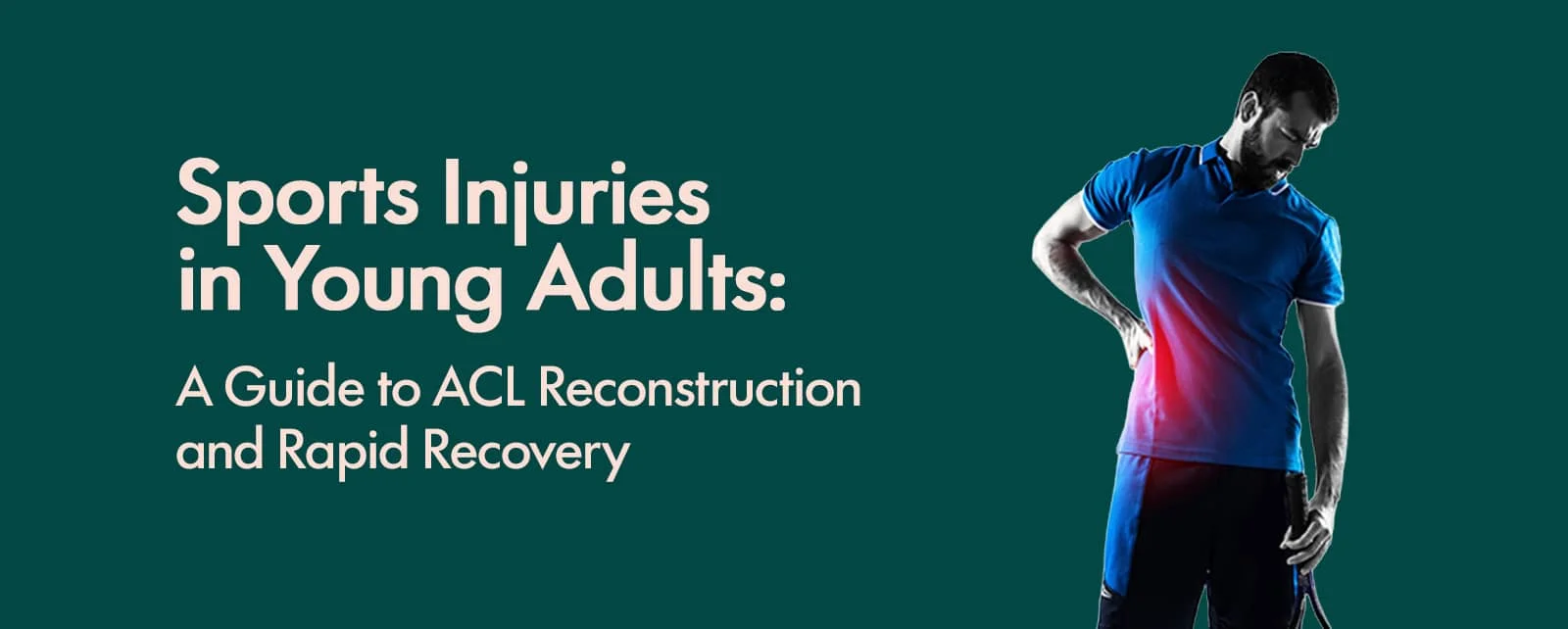
Sports Injuries in Young Adults: A Guide to ACL Reconstruction and Rapid Recovery
Sport has a way of ending conversations abruptly. You are mid-game, mid-run, mid-jump and then something happens and everything stops. Not always dramatically, sometimes it is almost quiet, just a pop that you feel more than hear and a sudden wrongness in the joint that tells you before any real pain arrives that something has changed.
Young adults who play sports seriously know this feeling or know someone who does because ACL injuries happen with a frequency that the general public does not quite appreciate until they are inside the experience of one.What also happens alongside the physical thing is a particular kind of fear about what comes next. The season. The team. The training routine that has become the structure around which everything else gets organised.
All of it suddenly sitting in a question mark. And the fear tends to be bigger than the actual prognosis justifies which is the first thing worth saying clearly because most people in an emergency room with ice on their knee have not been told this plainly enough. ACL injuries are common, they are well understood, and most young adults who go through the process properly come back to the sport they were doing before. Not everyone. But most.
What Tears and Why It Matters
The anterior cruciate ligament runs through the middle of the knee and its job is rotational stability, keeping the joint controlled during the kinds of movements sport requires. Pivoting, landing from a jump, changing direction quickly. When it tears the knee loses that control and the instability is not something you train around or manage with a brace if you want to return to real sport. It is a structural problem and it needs a structural solution.
The reconstruction uses a graft taken from the patient's own patellar tendon or hamstring to replace the torn ligament. The surgery is arthroscopic in most cases which means small incisions, less tissue disruption, less pain afterward, and a faster early recovery than people who have heard older accounts of this procedure tend to expect. Most patients are up and moving with help within the first couple of days. The surgery is genuinely the easier part of what follows.
The Waiting That Patients Hate
This is the thing that frustrates young patients most and that experienced orthopaedic surgeons are consistent about. The knee needs to be in the best possible condition before the reconstruction happens. Swelling reduced, range of motion reasonably restored, the surrounding muscle activated. Operating on an acutely swollen stiff knee produces worse outcomes than waiting two to three weeks and doing pre-operative physiotherapy first.
Patients push back on this because they want it done and done now. The wait feels like lost time. It is not lost time. It is preparation that changes what the surgery can achieve and anyone who has looked seriously at sports injury treatment in Delhi will tell you that surgeons who insist on this waiting period are the ones with better outcomes. The best orthopaedic surgeon in Delhi for this procedure is also the one who will make you wait if the knee is not ready.
Nine to Twelve Months and Why That Is Not Negotiable
That is the return to sport timeline for ACL reconstruction and it is the number that young athletes hear and immediately start trying to negotiate downward. The negotiation is understandable and it does not work because the timeline is not set by caution. It is set by biology.
The graft goes through a process in which it is gradually remodelled into tissue that has the mechanical properties of an actual ligament. This takes months. Around six to eight weeks after surgery the graft is at its weakest point and this is also the period when patients feel well enough to start doing things they should not. The feeling of recovery and the reality of what the graft can actually handle are not the same thing during this period and confusing the two is how re-injuries happen.
Athletes who return before nine months have significantly higher re-tear rates. A re-tear means a second surgery with worse outcomes and a longer more uncertain recovery. The nine months is not a suggestion.
What Rehabilitation Is Actually Doing
Rehabilitation after this surgery is not rest followed by gradually increasing activity. It is a structured programme that starts within days of the operation and works through phases with specific criteria that have to be met before the next phase begins. Early on the focus is reducing swelling, getting range of motion back, and activating the quadriceps which switches off neurologically after knee surgery in a way that genuinely surprises patients. You try to contract your thigh and nothing happens. That is a real thing that happens and it has to be addressed specifically.
Later phases build strength progressively, introduce proprioception training which is about retraining the nervous system to accurately sense where the joint is in space, and reintroduce sport-specific movement gradually. The criteria at each stage are performance-based not just time-based. A patient who has not met the criteria does not advance regardless of how many weeks have passed. This is what separates rehabilitation that produces good long-term outcomes from rehabilitation that gets someone back on the field too early and back in surgery six months later.
Sri Balaji Action Medical Institute in Paschim Vihar has the orthopaedic and sports injury programme, the surgical expertise and the rehabilitation infrastructure that this kind of treatment properly requires. For young adults in Delhi dealing with an ACL injury and trying to understand what the road from injury back to sport actually looks like, actionhospital.in is where that understanding starts.
Questions and Answers (FAQs)
Q1. How long does ACL reconstruction recovery take for young athletes?
Nine to twelve months before return to competitive sport for most young active patients. The timeline is determined by the biology of graft maturation and not by pain levels or perceived recovery. Athletes who return earlier have significantly higher re-injury rates and the data on this is consistent enough that experienced surgeons treat nine months as a minimum rather than a target.
Q2. What does good sports injury treatment in Delhi involve for an ACL tear?
Pre-operative physiotherapy to prepare the knee before surgery, arthroscopic reconstruction by a surgeon with high volume ACL experience, and structured rehabilitation that progresses through defined phases with performance criteria rather than time criteria alone. The quality of rehabilitation is as important as the quality of surgery for the final outcome.
Q3. Can ACL injuries heal without surgery in young adults?
Partial tears in less active people are sometimes managed conservatively. For young adults who want to return to sport involving pivoting and cutting movements, surgical reconstruction is the standard recommendation because the ligament does not heal reliably on its own and the instability of an unreconstructed ACL limits sport participation and increases long-term cartilage damage risk.
Q4. What should patients look for in the best orthopaedic surgeon in Delhi for this procedure?
Volume of ACL reconstructions performed, return to sport outcomes data, the availability of dedicated sports rehabilitation alongside the surgical programme, and honesty about the full recovery timeline. A surgeon who tells you what you want to hear about the timeline is not doing you a favour.
Q5. What happens when ACL rehabilitation gets rushed?
Re-injury rates increase substantially. The graft is vulnerable during the maturation period and returning to pivoting and cutting movements before it has developed adequate strength significantly raises the re-tear risk. Re-tears require a second reconstruction with outcomes that are generally worse than the first surgery and a recovery that is longer and less predictable.