Contact Us
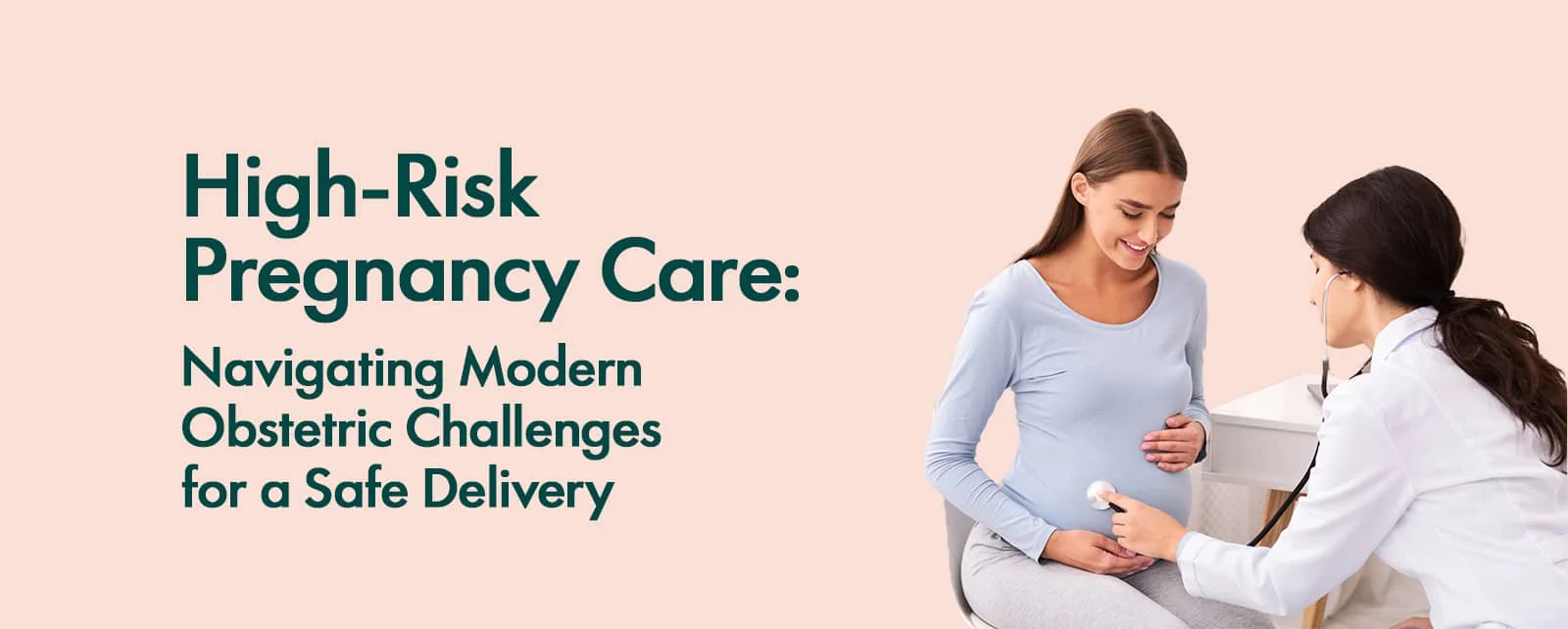
High-Risk Pregnancy Care: Navigating Modern Obstetric Challenges for a Safe Delivery
High-risk pregnancy is a phase in the life of women that lands heavily and does not always carry enough explanation alongside it. The category is genuinely broad which is part of what makes the phrase so unsettling when it gets applied to a specific person without the context that would help her understand where her situation sits within it.
Pre-existing diabetes, hypertension, thyroid conditions, previous pregnancy losses, multiple pregnancies, pregnancies after fertility treatment, advanced maternal age, fetal anomalies identified on scan, all of these fall under the same label despite being genuinely different situations with genuinely different implications and genuinely different levels of risk.
What the label reliably tells you is that this pregnancy needs more attention than routine obstetric monitoring provides. It does not tell you that the outcome will be bad. It does not tell you that something will go wrong. Most women in high-risk categories, under appropriate care, have healthy babies and recover well. That is the realistic picture and it tends to get lost in the weight of the words.
What Creates High Risk
A pregnancy is high-risk when something, either pre-existing or developing during the pregnancy, increases the probability of complications for the mother or the baby or both in a way that requires active management. Pre-existing conditions interact with pregnancy in ways that go both directions. The pregnancy affects the condition and the condition affects the pregnancy.
A woman with hypothyroidism needs more frequent thyroid monitoring because the thyroid demands change during pregnancy. A woman with type 1 diabetes needs intensive glucose management because glucose control affects fetal development in specific documented ways that are manageable when monitored properly and not manageable when they are not.
Complications that develop during pregnancy like preeclampsia are identified through monitoring and managed with the delivery timeline in mind. Preeclampsia is one of the more serious obstetric complications because its severity and the gestational age at which it develops together determine the management approach, and those decisions require experience with high-risk obstetric situations specifically. This is not a condition that standard obstetric training alone adequately prepares a clinician for.
Why It Is a Team Exercise
Routine obstetric care is largely managed by a single obstetrician or midwife. High-risk pregnancy is not. A woman with cardiac disease in pregnancy needs a cardiologist who specifically understands what pregnancy does to the cardiovascular system. A woman with lupus needs a rheumatologist involved alongside the obstetrician.
A pregnancy with identified fetal anomalies needs a neonatologist or paediatric surgeon involved in planning the delivery and the immediate post-delivery period well in advance of when those plans will be needed. The best gynecologist in West Delhifor a high-risk pregnancy is not only the most experienced obstetrician. It is the one working within a system where all of this specialist support actually exists and is actually accessible when needed rather than theoretically available in principle.
Fibroids and Pregnancy
Uterine fibroids complicate a meaningful proportion of pregnancies and how much they complicate depends on where they are, how many, and how large. Fibroids in certain locations increase the risk of miscarriage, preterm labour, malpresentation at delivery, and the need for caesarean section.
Managing fibroids during an active pregnancy is largely conservative because fibroid surgery in Delhi during pregnancy carries risks that generally outweigh the benefits of operating. The conversation about fibroid surgery is either before conception in women who are planning to get pregnant, or after delivery. During the pregnancy what matters is monitoring and planning for delivery in a setting with the capability to handle what fibroid-complicated deliveries can involve.
What the Monitoring Actually Looks Like
More frequent antenatal visits. More detailed fetal surveillance. Specialist input when the specific condition requires it. Delivery planning that accounts for the actual risks rather than generic obstetric risks. None of this is as frightening as the high-risk label initially suggests. It is a more attentive version of the monitoring all pregnant women receive, calibrated to what the individual situation actually requires.
Sri Balaji Action Medical Institute's obstetrics and gynaecology department manages the full range of obstetric complications alongside the neonatal care infrastructure that genuinely high-risk deliveries sometimes require. For women in Delhi who have been told their pregnancy is high-risk and are trying to understand what that means for their specific situation, actionhospital.in has the clinical team and the information worth starting with.
Questions and Answers (FAQs)
Q1. What does a high-risk pregnancy hospital in Delhi need to properly manage high-risk cases?
Experienced high-risk obstetricians, specialist support from cardiology, nephrology, endocrinology and other relevant departments, level III neonatal intensive care for premature or compromised newborns, interventional obstetric capability, and detailed foetal surveillance infrastructure. Not all hospitals with obstetric departments have all of these and it matters whether they do.
Q2. Does high-risk mean the pregnancy will have a bad outcome?
Not in most cases. The category signals the level of attention required not the outcome. The majority of women in high-risk categories deliver healthy babies under appropriate care. The designation exists to ensure the pregnancy receives the monitoring and management that reduces the probability of complications.
Q3. What should women with fibroids know before getting pregnant?
Women planning to conceive with known fibroids should discuss with their gynaecologist whether the size, number and location represent a meaningful risk for pregnancy. In some cases myomectomy before conception reduces risk significantly. In others the fibroids are unlikely to affect the pregnancy materially and surgery is not indicated. This is an individual assessment and not a generalised recommendation.
Q4. What is the most important thing for a woman classified as high-risk to understand?
That the monitoring and management recommendations from her care team exist for specific reasons connected to her specific situation. Understanding those reasons rather than simply following instructions puts her in a better position to notice changes and make informed decisions throughout the pregnancy.
Q5. How do I find the best gynecologist in West Delhi for a high-risk pregnancy?
Look for a gynaecologist working within a hospital that has full specialist support, neonatal intensive care capacity, and interventional obstetric capability. The individual gynaecologist's experience with high-risk cases matters and so does the system they work within because high-risk obstetric care cannot be delivered well by one person alone.