Contact Us
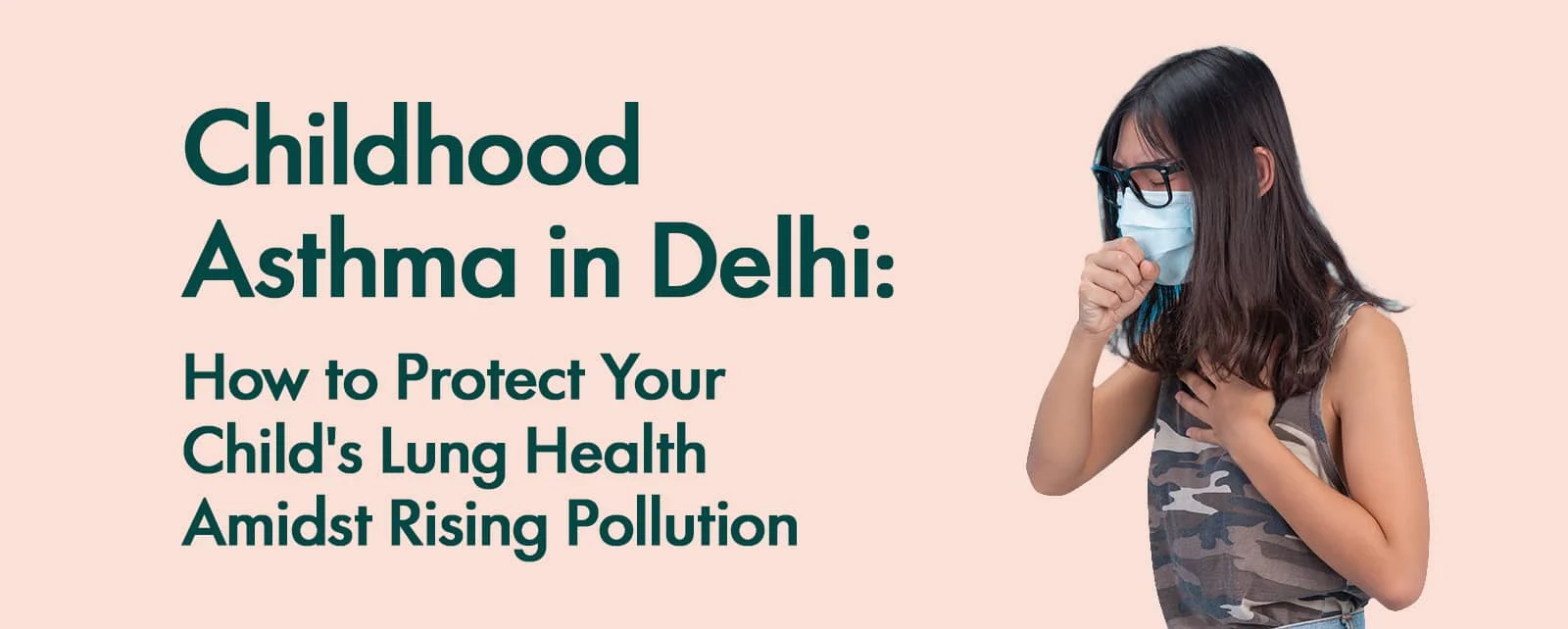
Childhood Asthma in Delhi: How to Protect Your Child's Lung Health Amidst Rising Pollution
Every parent in Delhi has a complicated relationship with the air quality index. You look at it in the morning the way you check the weather, except unlike the weather there is not much you can do about it except decide whether to send the children out or not. On the bad days you keep them in and run the purifier and feel like you are doing something.
On the days when the number is merely bad rather than hazardous you make peace with it and send them to school and try not to think too carefully about what years of this particular city's air is doing to lungs that are in the process of developing. Most families manage this by not thinking about it too carefully. Families with a child who has asthma do not have that option. The air quality index is not background information for them.
It is operational information.An asthma attack in a child is not something you forget once you have seen it. The wheeze, the visible effort, the way a child's face changes when they cannot get enough air easily. And in Delhi where the combination of vehicle emissions, industrial pollution, dust, and seasonal burning means that trigger exposure is essentially a given for any child spending time outdoors, managing childhood asthma properly is not a straightforward thing. It requires specific knowledge and specific action and a lot of parents are managing it with less of both than they need.
What the Airways Are Doing
Asthma is inflammation. Chronic inflammation of the bronchial tubes that makes them hypersensitive and prone to constricting further when a trigger arrives. Cold air is a trigger. Exercise is a trigger. Respiratory infections are triggers. Allergens are triggers. And the fine particulate matter that constitutes a significant proportion of Delhi's air on any given winter day is a trigger in a way that is particularly difficult to avoid because it is everywhere and the exposure is continuous rather than occasional.
The part that most people do not fully appreciate is that the inflammation is present between attacks as well as during them. A child who is not currently wheezing still has inflamed airways that are more reactive than they should be. This is why managing asthma is not primarily about having something available to use when an attack happens. It is about maintaining a level of control that reduces how often attacks happen and how severe they are when they do. A child whose asthma is genuinely well controlled reaches for the reliever inhaler infrequently. A child who reaches for it several times a week is not well controlled regardless of how manageable each individual episode seems at the time.
The Inhaler Resistance
Parents resist inhaled steroids more consistently than almost any other medication in paediatrics and the resistance comes from a real place. The word steroid carries associations that the inhaled form does not deserve. Inhaled corticosteroids act in the airway. The systemic absorption at the doses used in childhood asthma is minimal. The risk is not on the side of the medication. The risk is on the side of poorly controlled asthma, which means more frequent attacks, more emergency visits, more hospitalisations, and in rare but real cases respiratory failure in a child whose asthma was manageable and was not managed.
A good pediatrician in West Delhi will have this conversation directly because it needs to be had directly and the parents who understand why the medication is being recommended rather than simply being told to give it are the parents who give it consistently rather than only when the child is symptomatic. Giving preventer medication only when symptoms appear is like wearing a seatbelt only when you see a car coming. The timing is wrong.
November Through January
Delhi's worst air quality months are also the months with the highest respiratory infection rates which is a particularly bad combination for an asthmatic child. Infections are the most potent asthma triggers for most children and a cold that a non-asthmatic child moves through in a week can precipitate a severe attack in an asthmatic child if the asthma management does not account for it specifically.
An action plan for an asthmatic child should include what to do when an infection arrives, not only what to do when wheezing begins, because by the time significant wheezing starts the situation is already more advanced than it needed to get.During high pollution weeks the outdoor activity restrictions, the consistent indoor air quality management, the reliever accessible at all times rather than kept at home, the preventer being taken every single day rather than on days when symptoms are a concern, these are not optional extras. They are the practical adjustments that separate children who have difficult winters from children who manage through them.
Knowing When Home Is Not Enough
This is the question parents most want a clear answer to and most frequently do not have until they are already in the middle of an acute episode trying to make the decision. The answer is not complicated. Breathlessness is severe enough to affect speaking or feeding. Visible skin pulling at the neck or between the ribs with each breath.
Lips or fingernails that are pale or changing colour. Reliever inhaler not producing any improvement at all. A parent's instinct that the child is working much harder to breathe than the situation seems to call for. Any of these means paediatric emergency now, not wait and see for another hour. A paediatric emergency in Delhi at a centre with paediatric intensive care capacity is a different resource from a general emergency department. For a severe asthma attack the specific paediatric respiratory expertise and equipment matter.
Sri Balaji Action Medical Institute's paediatric department in Paschim Vihar handles childhood respiratory conditions including acute severe asthma within a hospital that has the paediatric intensive care infrastructure for cases that deteriorate. For parents in Delhi who have a child with asthma and are trying to build practical management knowledge rather than just anxiety, Action Hospital has the clinical team worth building a relationship with before the emergency rather than during it.
Questions and Answers (FAQs)
Q1. How does Delhi's pollution make childhood asthma harder to manage?
Fine particulate matter goes deep into airways and activates the inflammatory response that asthmatic airways are already primed to produce. During high pollution periods even children whose asthma is usually well controlled may find symptoms worsening in ways that need active management rather than the usual routine. Repeated long-term pollution exposure also contributes to developing asthma in susceptible children in the first place.
Q2. When should parents take a child to paediatric emergency in Delhi for an asthma episode?
When breathlessness affects speaking or feeding, when there is visible skin retraction at the neck or between the ribs, when lips or fingernails are pale or changing colour, when the reliever is producing no improvement, or when a parent's instinct says the child is working harder to breathe than they should be. That instinct is worth trusting and not worth waiting out.
Q3. Are inhaled steroids genuinely safe for children with asthma?
Yes at appropriately prescribed doses. They act locally in the airway with minimal systemic absorption. The risk of inadequately controlled asthma is substantially greater than the minimal risk of appropriately dosed inhaled corticosteroid therapy and this is not a close comparison in the data.
Q4. What makes the best pediatrician in West Delhi right for managing childhood asthma?
Specific experience with paediatric respiratory conditions, willingness to establish clear control criteria and adjust treatment until those criteria are actually met, ability to provide a written asthma action plan the family can use in real situations, and honest guidance about when escalation to emergency care is needed rather than vague instructions to go to hospital if it gets worse.
Q5. What practical steps matter most during Delhi's high pollution months for an asthmatic child?
Limiting outdoor activity during peak pollution hours, running indoor air purifiers consistently rather than occasionally, keeping the reliever inhaler accessible at all times, taking preventer medication every day not only on symptomatic days, and having a specific agreed plan with the child's paediatrician for infection management and symptom escalation written down rather than vaguely remembered.