Contact Us
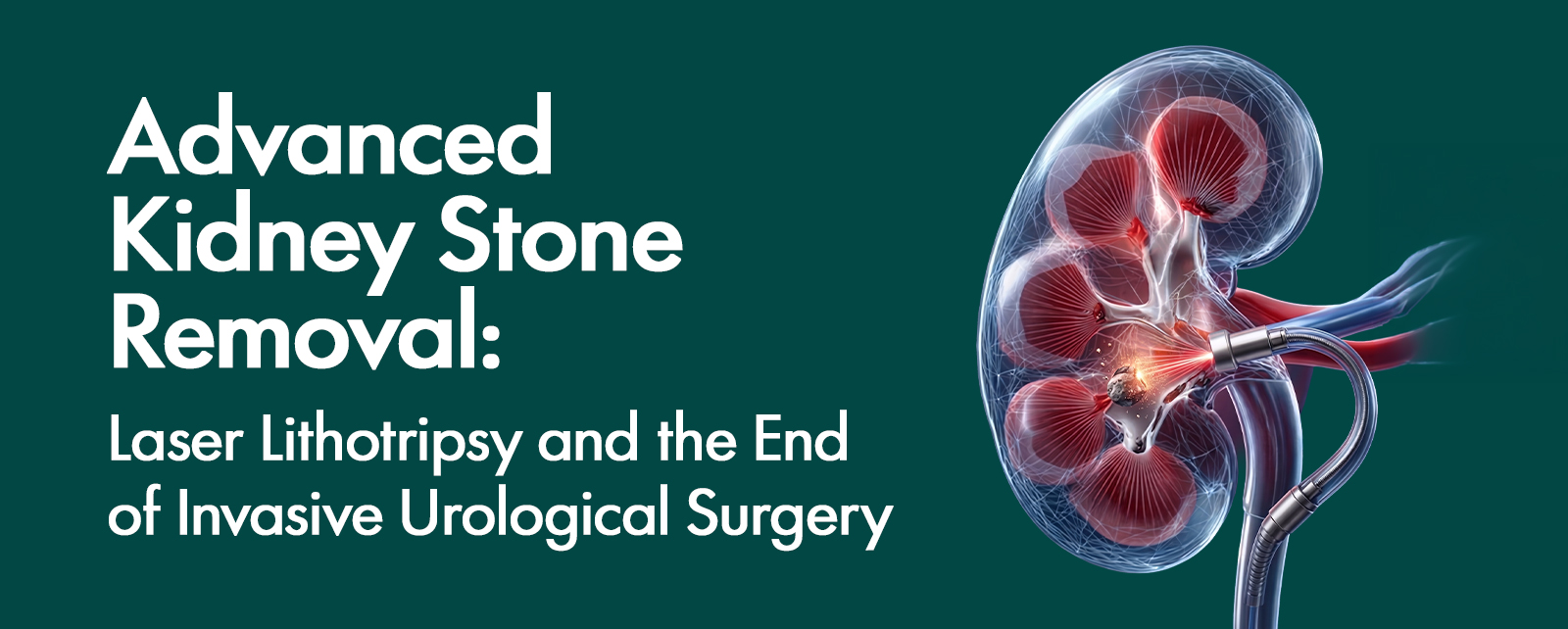
Advanced Kidney Stone Removal: Laser Lithotripsy and the End of Invasive Urological Surgery
One of the most common problems of the urinary system is kidney stones. These can lead to significant pain, blood in urine, burning on urination, vomiting and general discomfort. Earlier, many kidney stone cases required open surgery, which often involved large cuts, long recovery time, and significant pain.
However, the treatment of kidney stones has been altered by medical technology today.
Newer techniques, such as Laser Lithotripsy or robotic kidney surgery in Delhi are making the removal of kidney stones much quicker, safer, and less painful. Today, advanced urology care is about the least minimally invasive approach and allows patients to recuperate with minimal discomfort.
What is Laser Lithotripsy?
Laser Lithotripsy is an advanced treatment used to break kidney stones into very small pieces using laser energy.
A slender instrument called a ureteroscope is used during the process. It is passed via the natural urinary tract and doesn't require any cuts or stitches. After the stone is located, the laser breaks it down into small pieces. These fragments are either extracted or naturally excreted through urine.
This is a procedure that is often performed on patients with:
- Kidney stones
- Ureter stones
- Bladder stones
Laser lithotripsy is one of the most popular methods for the kidney stone treatment in Delhi today due to its accuracy and results.
The Shift Away from Traditional Surgery
Until recently, surgical extraction of kidney stones, particularly larger ones, was widespread. It was effective but with a number of drawbacks, including:
- Large surgical cuts
- Increased pain and discomfort
- Higher blood loss
- Longer hospital stays
- Slow recovery
Modern urology is now turning towards the minimally invasive procedure, which leaves less impact on the body and enhances the comfort of the patient.
Kidney stone treatment in Delhi has been completely revolutionized by laser treatments. In many instances, patients are able to receive advanced treatment without major surgery.
Benefits of Laser Lithotripsy
1. Minimally Invasive Treatment
One of the greatest benefits of laser lithotripsy is that it doesn't involve any cuts. The procedure is done through the natural urinary passage, which reduces damage to the body.
This also means less discomfort and scarring following treatment.
2. Faster Recovery and Return to Desk Job
Laser lithotripsy has a much faster recovery than the usual surgery. Most patients can resume their normal activities in a short time.
Patients stay in the hospital for a shorter period of time, making it convenient for patients and their families.
3. Less Pain and Discomfort
The laser can be directed at the stone with great accuracy, therefore causing less damage to surrounding tissues. This will help to minimize the pain following the procedure and make the patient more comfortable.
4. High Accuracy
Doctors can use laser technology to treat stones very precisely. Can fragment stones of varying size and hardness, including in hard-to-reach areas of the urinary tract.
5. Lower Risk of Complications
The risk of excessive bleeding, scars or infections is reduced due to a relatively low-risk procedure.
In several instances, patients recover from the procedure more comfortably and without complications.
Advanced Urology Care at Sri Balaji Action Medical Institute
Sri Balaji Action Medical Institute provides modern treatments for urology and endourology with top-notch technology and minimally invasive procedures.
This comprehensive uro-care hospital in Delhi has the following advanced procedures:
- Laser Lithotripsy
- Retrograde Intrarenal Surgery (RIRS)
- Endourology procedures for kidney and ureter stones
A focus is put on safe treatment, quicker recovery, and the comfort of the patient. With an advanced laser system, doctors can treat kidney stones with precision and minimize pain and recovery time for patients.
The hospital's urology department is prepared to treat various urinary stone diseases with contemporary treatment methods.
Final Thoughts
Technology continues to improve healthcare every year, and urology is also advancing rapidly.
Modern laser systems are making kidney stone treatment more efficient and patient-friendly. As these technologies continue to improve, invasive surgeries are becoming less common for many stone-related conditions.
Nowadays, there is no need for patients to dread the pain of open surgeries in every case. Advanced treatments, such as laser lithotripsy, have been improved to be smoother, safer and more comfortable.
This is a revolutionary change in the treatment of patients with urological issues and improves the quality of their treatment, rapid recovery and quality of life.
FAQs
- Is Laser Lithotripsy painful?
The procedure is generally done under anesthesia, and patients do not feel any pain during the treatment. After the procedure, there may be some mild discomfort, which is typically temporary.
- How long does recovery take after laser kidney stone removal?
Most patients can get better faster than with traditional surgery, and are able to resume normal activities in a few days, depending on their condition.
- Can laser lithotripsy treat large kidney stones?
Yes, for many, laser treatment can successfully break apart large, hard kidney stones. The treatment depends on the size and position of the stone.
- Why is laser lithotripsy preferred over open surgery?
Laser lithotripsy is chosen as it is less invasive, less painful, helps to shorten hospital stays, and typically results in a quicker recovery, with fewer complications.