Contact Us
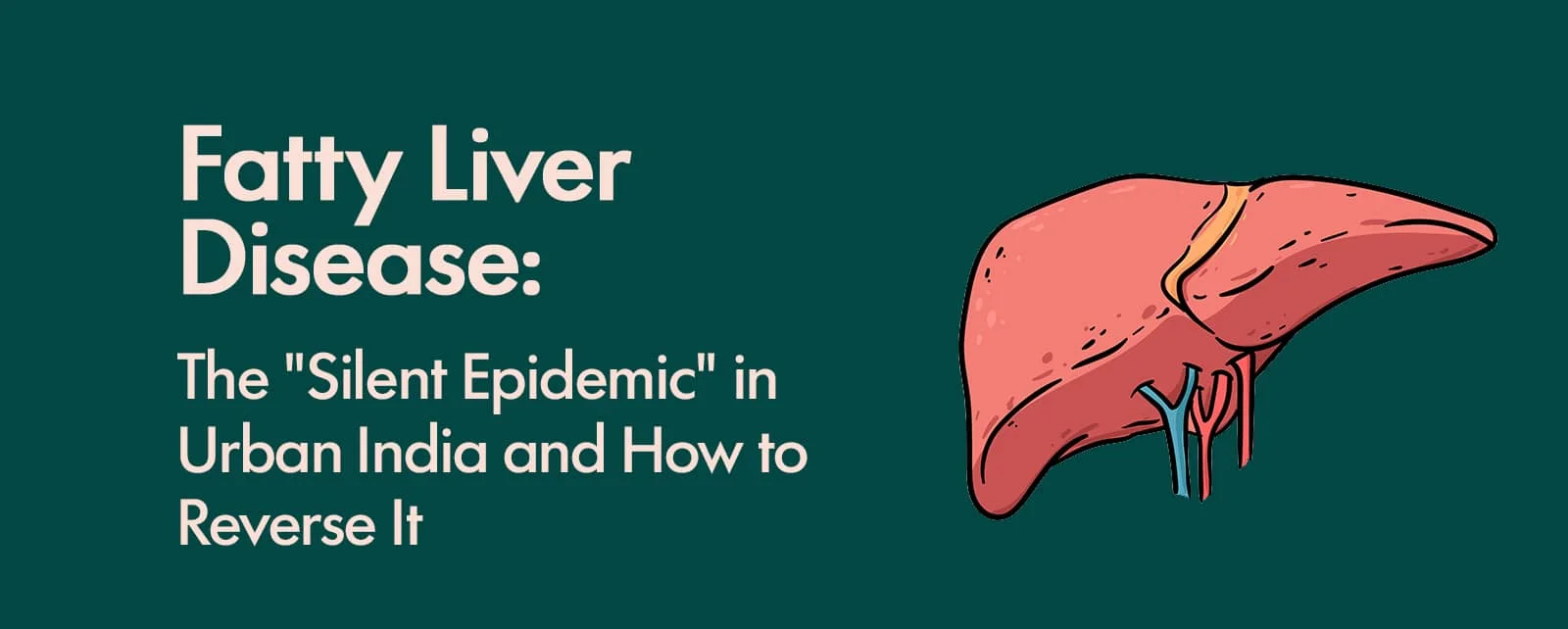
Fatty Liver Disease: The "Silent Epidemic" in Urban India and How to Reverse It
Introduction
It is especially disturbing that the condition is painless, is not marked by any obvious symptoms, and silently transforms the structure of one of the most vital organs of the body. Nowadays, fatty liver disease, with an estimated one in three urban Indians adults already affected, is alarmingly accurate to this description. Unhealthy habits, high-calorie food, the increasing incidence of metabolic syndrome, and uncontrolled stress are all factors that have contributed to sedentary lifestyles, unmanaged stress, and made it a condition that a liver specialist in Delhi is dealing with more often in all age groups.
Alarming and, what is more important, the addressable issue about fatty liver disease is the window that it provides. Liver has an exceptional ability to recuperate. Left unattended, it leads a path to fibrosis, cirrhosis and in some instances, liver failure. This blog reviews the situation candidly - its causes, its phases, and the clinical proceedings in which the turnaround is a real possibility at a fully equipped gastroenterology super speciality hospital in Delhi NCR
Fatty Liver: Living with More Than A Dietary Condition
Metabolic Foundations of an Increasing Condition
Condition of fat building up in the liver that does not happen within the framework of substantial alcohol intake is known as non-alcoholic fatty liver disease or NAFLD. It is found in a spectrum as a line between easy steatosis, where the presence of fat is observed, but the inflammatory response is low and non-alcoholic steatohepatitis (NASH), where the processes start to scar liver tissue with the resultant continual inflammation.
Disease is closely connected with metabolic well-being. The risk is increased by the following, independent of each other:
- Insulin resistance
- Obesity
- Type 2 diabetes
- High triglycerides
- Hypertension
Metabolic environment, especially favourable to hepatic fat, is found in urban India, where the average person spends a substantial proportion of his or her life sitting, ingests high amounts of refined carbohydrates and ultra-processed foods, and is occupied with occupational stresses that are chronic in nature.
Genetics also play a role. There are some variants of the gene, the majority of which are predisposing to the more aggressive fat accumulation in the liver cells, namely, to PNPLA3. That is why not all individuals are clinically relevant with regard to the signs of fatty liver, even though their lifestyle risk factors are rather modest, which is why the argument for regular liver testing in a super speciality hospital in Delhi NCR concerns even seemingly fit individuals.
Identifying the Warning Signs and Making a Diagnosis
What Patients Frequently Miss - and Why It Counts
Fatty liver disease in its initial stages is virtually asymptomatic. The majority of patients are informed about the condition by chance, either by an ultrasound done to evaluate some other condition or by routine blood tests that indicate moderately raised liver enzymes. There may be fatigue, a feeling of weightiness in the upper right abdomen, or a feeling of malaise, but they are forgotten readily.
Liver function tests and abdominal ultrasound are usually the first steps in the diagnostic process of a gastroenterology hospital in Delhi. In the case of more detailed staging (especially to differentiate simple steatosis and NASH or early fibrosis), the following can be suggested:
- Fibroscan (transient elastography)
- Liver biopsy
Such instruments can help clinicians correctly locate the patient along the disease curve and define the urgency and the type of intervention, respectively.
Liver specialist in Delhi who participated in the evaluation will also check the co-existing metabolic disorders since the results of treating fatty liver disease alone, without considering the insulin resistance, dyslipidaemia, or high blood pressure that remains the cause, are limited and short-lived.
Fatty Liver Reversal: Evidence-Based Care in Practice
Living, Medicine, and the Place of Specialist Oversight
Structured lifestyle change is the most effective intervention in fatty liver disease at the early stage. There is clinical research that indicates that a continuous weight loss of five to ten per cent of the body is clinically found to exert a significant effect on hepatic fats, liver enzymes, and inflammatory indices. This is not just advice to eat less, but a measured nutrition regimen, a planned exercise regimen, and it will take, in most instances, the help of metabolic and dietary experts who operate in liaison with the treating physician.
Pharmacological intervention can also be considered for patients with:
- NASH
- Advanced fibrosis
- Co-existing diabetes
Insulin sensitisers, vitamin E, among selected patients, and more recent agents focusing on metabolic pathways are becoming part of the therapeutic toolkit that can be found in a super speciality hospital in Delhi NCR. The exact treatment regimen is identified based on:
- The disease size
- The overall metabolic situation of the patient
- His or her response to the initial lifestyle measures
Alcohol, even in moderation, must be completely avoided among patients with fatty liver disease of any stage. Though NAFLD is characterised by its non-alcoholic nature, alcohol significantly hastens the instance of hepatic inflammation and fibrosis, and exclusion of alcohol in the equation is one of the most reliable sources of liver recovery in clinical trials.
Conclusion
Fatty liver disease is not an inescapable condition. Due to the fact that so many urban Indians with such a condition live their lives without this knowledge, the way to a healthier liver is indeed within reach, so long as the appropriate clinical assistance is offered. The three pillars that support recovery are:
- Early diagnosis
- Long-term lifestyle change
- Specialists who are aware of the entire metabolic picture
Of all organs, the liver should return the efforts put into its maintenance.
Sri Balaji Action Medical Institute provides a hepatogastroenterology programme along with a team of specialists highly experienced in treating the full range of liver diseases - fatty liver disease in its early stages up to hepatic pathology. Combined form of the institution incorporates clinical gastroenterologists, metabolic specialists, dietitians, and diagnostic teams on the same platform so that patients have care based on a comprehensive approach rather than in isolation. Individuals with questions regarding their liver health or those who desire to know their risk will be offered an assessment at Sri Balaji Action Medical Institute.
Questions and Answers (Frequently Asked)
Q1. At which point can I meet with a liver specialist in Delhi to treat fatty liver disease at Sri Balaji Action Medical Institute?
See a liver specialist in Delhi when the blood tests reveal high liver enzymes, or liver imaging reveals the presence of fat. Sri Balaji Action Medical Institute provides hepatological assessments on time and comprehensively.
Q2. What is the diagnostic instrument of a gastroenterology hospital in Delhi, such as Sri Balaji Action Medical Institute, used for fatty liver?
Ultrasound, fibroscan, liver function tests and biopsy are commonly used in a gastroenterology hospital in Delhi. All these are offered by Sri Balaji Action Medical Institute in a single care set-up.
Q3. Is it possible to completely treat fatty liver disease in a super speciality hospital in Delhi NCR by lifestyle modification?
Yes, in early stages. A super speciality hospital in Delhi NCR, such as Sri Balaji Action Medical Institute, is the combination of dietary counselling, metabolic control, and specialist control to provide measurable liver recovery.
Q4. Does the liver specialist at Sri Balaji Action Medical Institute, Delhi, deal with fatty liver with or without diabetes or metabolic conditions?
Absolutely. The liver specialist of Sri Balaji Action Medical Institute, Delhi, collaborates with metabolic and endocrine specialists to address the fatty liver disease as part of the greater health image of the patient.