Contact Us
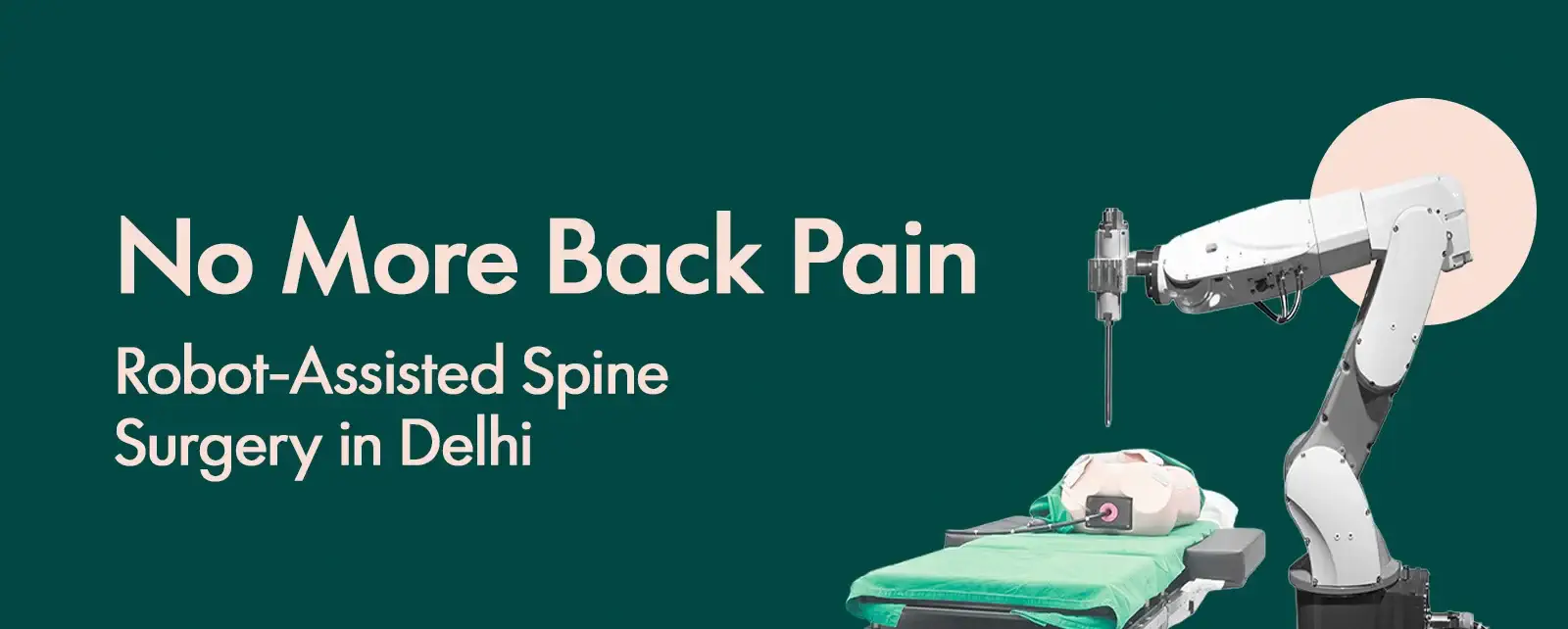
No More Back Pain – Robot-Assisted Spine Surgery in Delhi
Introduction
Spinal disorders are among the most disabling health problems in India, affecting millions of people. Chronic lower back pain, herniated discs, scoliosis, and spinal stenosis can significantly impair daily life and reduce a person’s ability to perform routine activities. With rapid advancements in surgical technology, patients no longer need to endure prolonged suffering or rely only on conventional procedures that often require extended recovery.
Robot-assisted spine surgery has revolutionised the way complex spinal conditions are treated by offering patients:
- Faster recovery
- Fewer complications
- Greater surgical precision
Today, spine surgery in Delhi has evolved to a standard of care for patients seeking world-class treatment, with specialised hospitals delivering outcomes comparable to international standards.
Understanding Robot-Assisted Spine Surgery
How Robotic Technology Differs from Conventional Surgery
Traditional spine surgery is often highly demanding, requiring significant manual precision and sometimes involving greater disturbance of surrounding tissues. Robotic-assisted spine surgery has changed this approach by using pre-operative imaging and real-time guidance to assist the surgeon with exceptional accuracy.
It is important to understand that the robot does not operate independently. The robotic arm functions as an extension of the surgeon’s expertise, translating the surgical plan into precise movements. The surgeon remains fully in control throughout the procedure, while the robotic system helps by:
- Reducing micro-tremors
- Enhancing accuracy during implant placement
- Ensuring millimetre-level precision according to the surgical plan
Conditions Treated Using Robot-Assisted Spine Surgery
Robot-assisted spine procedures are increasingly being used for a wide range of spinal disorders, including:
- Degenerative disc disease
- Lumbar spinal stenosis
- Spondylolisthesis
- Scoliosis
- Vertebral fractures
Many patients who previously managed their condition only with pain medication or conservative care may now benefit from minimally invasive surgical solutions with shorter hospital stays and lower risk profiles.
Patients seeking spine surgery in Delhi no longer need to travel abroad, as several hospitals in the capital now offer advanced spine surgery systems comparable to global centres of excellence.
Why West Delhi is Emerging as a Hub for Advanced Spine Care
Proximity, Infrastructure, and Expertise
Over the last decade, the healthcare infrastructure in West Delhi has expanded significantly. This region has become a preferred destination for patients from:
- Rajasthan
- Haryana
- Uttar Pradesh
- The National Capital Region (NCR)
The area has a strong concentration of multi-speciality hospitals offering comprehensive spine care. Patients seeking an orthopaedic spine specialist or experienced neurosurgeons benefit not only from easy accessibility but also from hospitals equipped with:
- Advanced rehabilitation units
- Dedicated orthopaedic and spine surgery departments
- Comprehensive post-operative recovery services
This integrated approach to diagnosis, surgery, and rehabilitation plays a critical role in improving long-term outcomes.
The Role of Multidisciplinary Teams
The success of robotic spine surgery depends not only on technology but also on the expertise of the medical team operating it. Effective spine care requires coordination among:
- Spine surgeons and neurosurgeons
- Neurologists for pre-surgical evaluation
- Radiology and imaging specialists
- Anaesthesia experts
- Physiotherapists and rehabilitation teams
Leading spine surgery hospitals in West Delhi provide these services under one roof, ensuring continuity of care and reducing the burden of multiple hospital visits for patients.
Key Benefits of Robot-Assisted Spine Surgery
High Precision and Enhanced Safety
The spine is one of the most complex anatomical structures in the body. It houses the spinal cord and delicate nerve roots, and even minor errors during surgery can lead to serious complications. Robotic assistance allows surgeons to plan the placement of screws, implants, and instruments before the surgery begins, significantly reducing the risk of nerve injury and improving surgical accuracy.
Reduced Recovery Time and Shorter Hospital Stay
Due to the minimally invasive nature of robotic procedures, patients often experience:
- Less post-operative pain
- Minimal blood loss
- Smaller incisions
- Faster mobilisation
Many patients are able to start walking within 24 to 48 hours after surgery, reducing the risk of complications related to prolonged bed rest such as deep vein thrombosis and respiratory infections.
Lower Risk of Revision Surgery
One of the major advantages of robotic spine surgery is the reduced likelihood of implant malposition. Accurate placement lowers the chances of post-operative complications and revision procedures, resulting in:
- Reduced need for repeat surgery
- Better long-term outcomes
- Improved patient satisfaction
Sri Balaji Action Medical Institute
Sri Balaji Action Medical Institute is a well-established multi-speciality hospital located in Paschim Vihar, New Delhi. For decades, it has served patients from Delhi and surrounding regions. The institute is recognised as a spine surgery hospital in West Delhi and offers comprehensive spine care through a team of:
- Experienced spine surgeons
- Neurologists
- Rehabilitation specialists
The hospital provides advanced diagnostic and surgical infrastructure, including modern operating theatres designed to manage complex spinal conditions. Its structured care model includes detailed pre-operative evaluation, precise surgical intervention, and organised post-operative rehabilitation.
Sri Balaji Action Medical Institute treats a wide range of spinal conditions, including:
- Disc herniations
- Spinal deformities
- Traumatic spinal injuries
The institute’s focus on minimally invasive and technology-assisted spine surgery reflects its commitment to improving outcomes while minimising recovery burden.
To learn more, visit:www.actionhospital.in
Conclusion
Spine care has evolved significantly over the years. Robot-assisted surgery offers patients a more predictable, precise, and patient-friendly option compared to traditional approaches, especially in cases that previously involved:
- Long surgeries
- Extended hospital stays
- Uncertain outcomes
One of the most important decisions a patient can make is selecting the right hospital—one that combines advanced technology with experienced clinical expertise and comprehensive rehabilitation support.
Sri Balaji Action Medical Institute continues to be a trusted centre for advanced spine care in West Delhi, providing patients with the attention, skill, and structured recovery support needed for long-term improvement and a better quality of life.
Frequently Asked Questions (FAQs)
Q1. What spinal disorders can be treated using robot-assisted spine surgery?
Robot-assisted surgery is commonly used for conditions such as degenerative disc disease, spinal stenosis, scoliosis, vertebral fractures, and spondylolisthesis.
Q2. Is robot-assisted spine surgery safe for elderly patients with degenerative spine conditions?
Yes. Robot-assisted techniques are particularly beneficial for elderly patients as they often involve less blood loss, smaller incisions, reduced surgical trauma, and quicker recovery.
Q3. What is the recovery time after spine surgery in Delhi at Sri Balaji Action Medical Institute?
Recovery depends on the procedure and patient condition. However, many minimally invasive cases allow mobilisation within 48 hours, with return to routine activities typically within 6 to 12 weeks.
Q4. Does Sri Balaji Action Medical Institute provide post-operative rehabilitation?
Yes. The institute offers structured physiotherapy and rehabilitation programmes designed to support complete recovery after spine surgery.