


 Contact Us
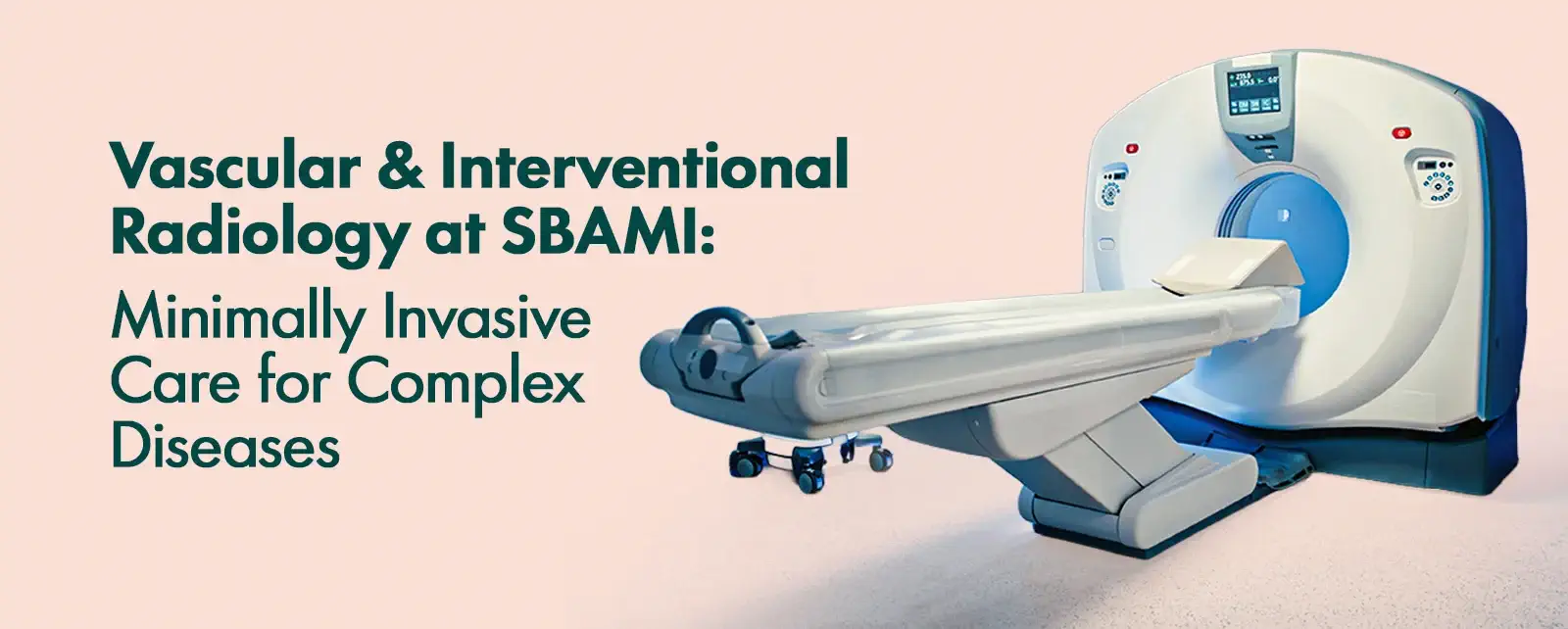
Vascular and Interventional Radiology at SBAMI: Minimally Invasive Care for Complex Diseases
The change in modern medicine is rapid. Nowadays, numerous severe illnesses do not require extensive operations. Interventional Radiology (IR) is one of the most valuable developments in this sphere.
Vascular and Interventional Radiology at Sri Balaji Action Medical Institute (SBAMI) provides modern, minimally invasive therapies to vascular, cancer, and organ-related illnesses. These methods involve imaging such as ultrasound, CT scanners, fluoroscopy, as well as high-resolution X-rays.
Due to these methods used by the radiology department Delhi, physicians are able to cure illnesses using very tiny incisions as opposed to huge incisions. This implies that patients experience less pain, quicker recovery and reduced hospital stays.
What is Interventional Radiology?
Interventional Radiology is a special branch of medicine which involves imaging to direct therapy within the body. Doctors insert small instruments and thin tubes known as catheters in order to reach the precise point of problems, as opposed to open surgery.
These are carried out using minute punctures with typically just a few millimetres in diameter. The imaging machines are used to enable the doctor to see inside the body in real time, thereby making the treatment very precise.
This approach reduces risks such as infection and blood loss. It also aids patients to heal quicker, resume normal life earlier.
Functioning of Interventional Radiology
Interventional Radiology of this bestmultispeciality hospital in West Delhi, deals with the modern imaging systems like CT scans, ultrasound, fluoroscopy, and X-rays. The tools enable the doctors to clearly view organs and blood vessels as the procedure is going on.
This is done by a small tube that is inserted into the body through a small opening. This tube passes through the blood vessels to the affected part. This is then treated at that site.
Because of the minimally invasive nature of the procedure, patients have less pain. Most of the treatments may even be performed on an outpatient basis, and the patients can leave the same day.
Minimally invasive Intervention in Vascular Diseases
Interventional Radiology is one of the most critical applications in the treatment of vascular diseases, particularly blood vessels disease.
Peripheral Arterial Disease (PAD)
Peripheral arterial disease occurs when the leg arteries are narrowed or clogged. This decreases blood circulation and makes one experience pain particularly when walking.
Endovascular therapy
At SBAMI,
this type of therapy assists in the restoration of blood flow. This enhances mobility, pain relief, wound healing and in severe cases, it aids in preventing amputation.
Vascular Treatment Procedures
Various minimally invasive surgeries are performed based on the condition:
- Balloon Angioplasty: It involves inflating a small balloon to open up blocked arteries.
- Stent Placement: A stent is a device that holds the artery open.
- Drug-Coated Balloons: Can help to prevent the re-narrowing of the artery.
- Thrombolysis: Breaks up blood clots.
- Thrombectomy: Mechanical removal of clots.
One of the most important procedures at SBAMI, the best blood test hospital Delhi, in case of severe vascular disease is lower limb angioplasty.
Complex Circulation Problems Care
More severe cases, such as chronic ischemia of limbs and acute arterial occlusions, are also treated with Interventional Radiology.
Due to the image-guided nature of the treatment, the doctors are able to plan out each procedure depending on the condition of the patient, their anatomy and urgency. This guarantees proper and efficient care.
Interventional Oncology: Cancer Therapy
Interventional Radiology has a significant role in cancer treatment in a discipline that is known as interventional oncology.
In this method, image guidance is used to treat tumours directly by doctors. This enables targeted therapy and avoids healthy tissues.
Liver Cancer Treatments
In SBAMI, the advanced liver-directed therapies involve:
Transarterial Chemoembolization (TACE)
Chemotherapy is administered into the tumour itself, and its blood flow is obstructed.
Transarterial Radioembolization (TARE)
Radioactive particles of small sizes are directed into the tumour to kill cancer cells.
These therapies are very specific and efficient.
Ablation and Diagnosis of Tumours
Interventional Radiology also comprises diagnostic and treatment of tumors.
- Image-Guided Biopsy: Helps doctors obtain proper Diagnosis.
- Tumor Ablation: Ablation of tumors involves heat or cold to eliminate tumors, without surgery.
Radiofrequency ablation, microwave ablation, and cryoablation are some of the methods employed based on the case.
Other Conditions Treated
Interventional Radiology is not limited only to vascular disease and cancer.
Other areas of its use in SBAMI include:
- Varicose veins
- Uterine fibroids
- Obstructive jaundice (treated with biliary drainage and stenting)
- Organ-related disorders
- Abnormalities of blood vessels such as aneurysms.
This demonstrates the use of IR in the treatment of various medical conditions.
Technological Intervention of Treatment
Interventional Radiology is largely dependent on advanced technology. Modern imaging systems are used in hospitals to ensure high accuracy in procedures.
These include:
- High-resolution X-ray machines
- Fluoroscopy units
- Ultrasound devices
- CT scanners
These instruments enable physicians to view the interiors of the body easily and carry out treatment safely and accurately.
Benefits of Minimally Invasive Care to Patients
Interventional Radiology is the favourite of many patients since it has various advantages:
- Less pain compared to open surgery
- Less scarring and smaller incisions
- Reduced blood loss
- Faster recovery time
- Shorter hospital stays
Option for same-day discharge in some cases
This renders it an easy and less risky choice for most patients.
Vascular and Interventional Radiology at SBAMI
At Sri Balaji Action Medical Institute, Vascular and Interventional Radiology is a blend of the latest imaging technology, qualified doctors, and patient care.
The department provides an extensive variety of services, such as:
- Peripheral vascular interventions
- Lower limb angioplasty
- Interventional oncology treatments
- Image-guided biopsy
- Biliary drainage procedures
- Treatments of the veins and organs
This combined strategy assists in the precise and careful treatment of complicated health issues.
Conclusion
Interventional Radiology is revolutionising the manner in which complex diseases are managed by radiology department Delhi. It enables physicians to treat severe ailments in the least invasive procedures with a high degree of accuracy.
This state-of-the-art method is used at Sri Balaji Action Medical Institute, where patients can be treated effectively with less pain, quicker recovery, and improved outcomes. Interventional Radiology offers safe and precise solutions to the contemporary healthcare requirements, both from vascular diseases to cancer care.

