Contact Us
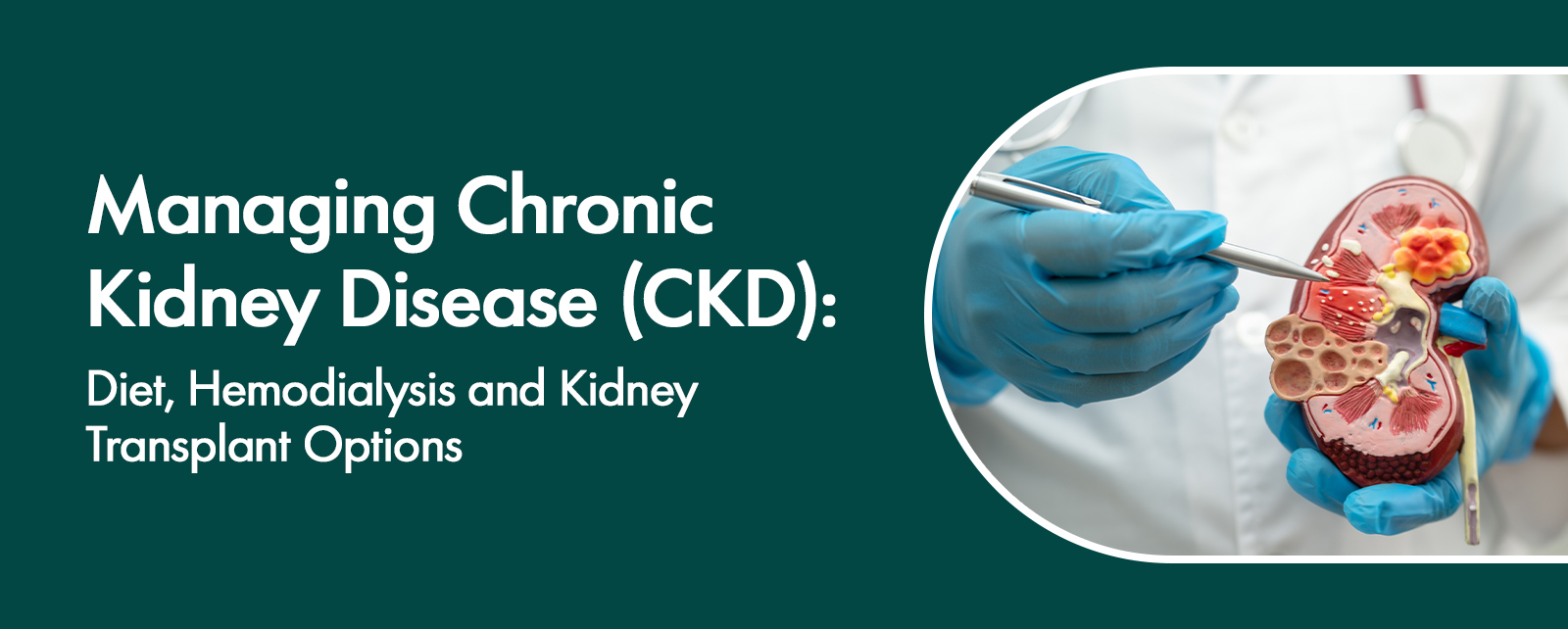
Managing Chronic Kidney Disease (CKD): Diet, Hemodialysis and Kidney Transplant Options
Chronic Kidney Disease (CKD) is not an acute disease. It shows no symptoms for months or years before slowly damaging the kidney functions, before the majority of patients realize that something is amiss. By the time symptoms such as:
- Persistent fatigue
- Puffed-up ankles and feet
- Reduced urine output
- Difficulty concentrating
- Loss of appetite
- Unexplained weakness
appear, the disease has frequently been in a very advanced condition.
The most problematic thing about CKD is that it requires active management throughout the course of the disease, not only at the stage of crisis. Since dietary discipline during their early stages up to renal replacement therapy in case of kidney failure, patients gain a lot of benefits with an organized, specialist-directed treatment. Early attendance at a Nephrology hospital in Delhiduring the development of kidney dysfunction can significantly change the future course of this disease.
The Nutrition in Slowing Down CKD
One of the most potent non-pharmacological approaches for CKD patients is nutrition, which is often underestimated. The kidneys help the blood to eliminate any metabolic waste products, and when this ability is impaired, some of the elements in the diet start piling up to dangerous levels. It is hardly surprising that a dialysis centre in Delhior a nephrology clinic will almost always include a renal dietitian on the care team.
Protein consumption must be carefully balanced. Although protein is necessary in the body to repair it, a surplus will produce nitrogenous waste, which will not be properly processed by the stressed kidneys. The majority of nephrologists suggest moderate protein restriction during the stages 3 and 4 CKD, but the exact limit depends on the specific glomerular filtration rate (GFR) values of an individual.
K + regulation is important during the progression of CKD. High levels of potassium have the potential to interfere with heart rhythm and have severe cardiovascular implications. The patients are usually encouraged to reduce foods rich in potassium, like bananas, oranges, potatoes, and tomatoes, and replace them with those that have low amounts of potassium under the care of a dietitian.
Restriction of phosphorus is also important. High phosphorus levels precipitate bone disease and vascular calcification in CKD patients. The common sources that should be monitored are processed foods, dairy products, and carbonated beverages. Later on, fluid restriction is required as the kidneys are no longer able to maintain fluid balance.
Hemodialysis: When the Kidneys are No Longer Able to Cope on Their Own
Once the kidney performance is reduced to about 10-15 percent of the normal performance, which is known as Stage 5 or End-Stage Renal Disease (ESRD), the body cannot support itself anymore.
The most frequently employed renal replacement therapy at this level is hemodialysis.
How Hemodialysis Works
During hemodialysis:
- The blood is withdrawn from the body by a vascular path, typically an arteriovenous fistula.
- The blood is filtered by a dialysis machine.
- The extravagant products and surplus fluid are eliminated.
- The blood is filtered and pumped back into circulation.
Typical Hemodialysis Schedule
Most patients require:
- Three dialysis sessions a week.
- Each session is about 3-5 hours.
- Constant checking of vital signs and the effectiveness of treatment.
Although hemodialysis cannot reverse the functions of the kidneys, it is an effective method of filtration of the kidneys and allows the patient to lead a decent life.
Why Adherence Matters
Lack of dialysis sessions may lead to:
- Dangerous fluid accumulation
- Elevated potassium levels
- Severe metabolic disturbances
- Hospitalization
- Life-threatening complications
A properly furnished Nephrology hospital in Delhi with specific dialysis facilities will guarantee:
- Dialysis adequacy.
- Vascular access maintenance.
- Nutritional assessment.
- Treatment of CKD complications.
Kidney Transplant: Replacement vs. Restoration
Kidney transplantation is the closest that will give an eligible patient a renal functionality that is approximated and is far better than dialysis in terms of quality of life and life span.
Akidney transplant hospital in Delhi assesses transplant candidacy by conducting an overall assessment, which involves:
- Cardiac health evaluation
- Infection screening
- Immunological compatibility testing
- Cancer screening
- Psychosocial assessment
- Long-term medication adherence ability.
Kidney Transplantation Types
Living Donor Transplant
A living donor transplant is usually characterized by:
- Parents
- Siblings
- Spouses
- Other compatible family members
Advantages include:
- Enhanced graft survival.
- Shorter waiting periods.
- Decreased cold ischemia.
- Better surgical planning.
Deceased (Cadaveric) Transplant
Such transplants are done under the government-controlled organ donation programmes, and they offer a life-saving alternative to those patients who lack an appropriate living donor.
Life After Kidney Transplant
After transplantation, patients need:
- Lifelong immunosuppressive medications
- Frequent monitoring of kidney functions.
- Blood pressure management
- Infection surveillance
- Routine follow-up appointments
The success of a transplant in the long term is determined by:
- Medication adherence
- Regular monitoring
- Lifestyle modifications
- Ongoing nephrology support
The hospital that follows up on the kidney transplant is equally important in the survival of the graft as the surgical team that carried out the surgery.
Sri Balaji Action Medical Institute: Nephrology Care at All Stages
Sri Balaji Action Medical Institute, Paschim Vihar, New Delhi, is a complete Institute of Nephrology that provides services of clinical nephrology, hemodialysis, hemodiafiltration, peritoneal dialysis, kidney biopsy, and kidney transplantation. Under Dr. Shiv Chadha, Consultant Nephrologist with extensive experience in managing complex kidney diseases, provides well-organised CKD care that commences with dietary counselling during the early stages of the disease, all the way to transplant follow-up.
With NABH accreditation and supported by more than 20 lakh patient interactions, Sri Balaji Action Medical Institute is an integrated renal care centre in a multi-speciality setting that aims to treat the complex comorbidities that come with kidney disease.
Frequently Asked Questions
Q1. In what CKD stage must a patient visit a nephrology hospital in Delhi to receive a specialist?
Stage 3 CKD and below: Specialist nephrology consultation is suggested since the GFR is below 60 at this stage to delay progression and help prevent complications due to structured management.
Q2. How many times do the patients have to visit the dialysis centre in Delhi to receive hemodialysis?
The majority of patients with end-stage CKD need hemodialysis thrice a week, each session taking about three to five hours based on their clinical conditions.
Q3. How does a kidney transplant hospital in Delhi establish eligibility criteria for the transplant?
Eligibility includes cardiac fitness, no active infection, immunological matching, no malignancy, and no contraindication of a psychosocial fit to lifelong adherence to post-transplant medication.
Q4. Does Sri Balaji Action Medical Institute have a living donor and cadaveric kidney transplant programme?
Yes, the Institute of Nephrology is in charge of living-related and cadaveric kidney transplants, with the help of a specialised surgical, nephrology, and post-transplant follow-up team.